
Over 80 percent of british manufacturers now rely on automated labelling machines to keep production lines running smoothly. Accurate and consistent labelling is not just about brand image, it is crucial for meeting strict industry standards and avoiding costly mistakes. Whether you run a small workshop or a major factory, understanding how modern labelling machines work can help you streamline processes, reduce errors, and maintain a competitive edge in the fast-paced world of manufacturing.
| Point | Details |
|---|---|
| Understanding Labelling Machines | Labelling machines automate the application of labels with precision, enhancing production efficiency across various industries. |
| Types of Labelling Machines | Key types include semi-automatic, automatic inline, and specialised machines, each catering to specific production needs. |
| Customization and Compliance | Advanced customisation options and integrated verification systems ensure machines meet regulatory standards and adapt to unique product specifications. |
| Financial Considerations | Evaluating the total cost of ownership and avoiding common pitfalls are essential for manufacturers investing in labelling technology. |
Labelling machines represent sophisticated pieces of industrial equipment designed to automatically apply adhesive labels onto products with precision and consistency. These specialised machines transform manual labelling processes by enabling manufacturers to print, apply, and verify product labels at remarkable speeds and accuracy levels. From small desktop units suitable for craft producers to high-speed inline systems for industrial manufacturing, labelling machines serve diverse production environments.
At their core, labelling machines function through a series of intricate mechanical and technological processes. Accurate label placement involves multiple stages: product transportation, label dispensing, precise positioning, and application. Modern machines incorporate advanced sensors and vision systems to ensure labels are aligned perfectly, reducing human error and maintaining packaging quality. Manufacturers can choose from various configurations including wrap-around labellers for cylindrical containers, front-and-back labellers for bottles requiring multiple information panels, and specialised pharmaceutical labelling systems with code verification capabilities.
The technological evolution of labelling machines has significantly impacted production efficiency across multiple sectors. Food manufacturers, pharmaceutical companies, cosmetics brands, and beverage producers rely on these machines to streamline packaging processes. Key advantages include consistent label placement, reduced labour costs, increased production speeds, and enhanced quality control. Whether handling delicate vials in a pharmaceutical setting or applying wraparound labels on beverage bottles, modern labelling machinery offers unparalleled precision and reliability.
Understanding labelling machine types is crucial for selecting the right equipment. Primary categories include:
By investing in appropriate labelling technology, manufacturers can significantly enhance their production capabilities, reduce waste, and maintain stringent quality standards across diverse industrial applications.
Labelling machines represent a diverse range of technological solutions designed to meet the specific packaging requirements of different industries. Choosing the right bottle labelling machine depends on understanding the nuanced differences between various machine types and their unique capabilities. Manufacturers must carefully evaluate their production needs, product specifications, and operational constraints when selecting an appropriate labelling system.
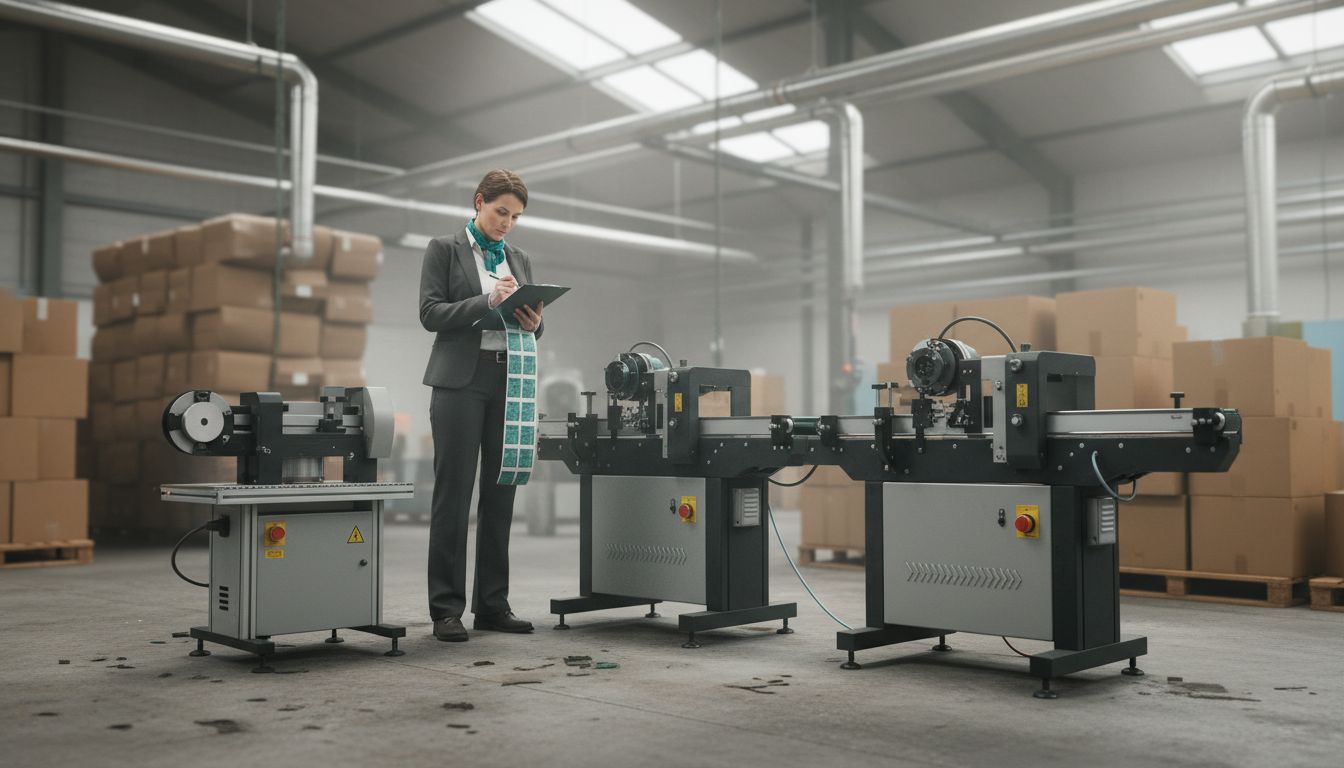
Semi-Automatic Labelling Machines are particularly valuable for smaller production environments. These versatile machines offer significant improvements in production efficiency and product presentation. They typically require minimal operator intervention, allowing businesses to transition from manual labelling processes while maintaining high standards of precision. Ideal for craft producers, small food manufacturers, and businesses with frequent product changeovers, semi-automatic machines provide a flexible solution that bridges the gap between manual application and fully automated systems.
Industrial production environments demand more sophisticated solutions. Automatic Inline Labelling Systems represent the pinnacle of labelling technology, designed for continuous high-volume manufacturing. These advanced machines can handle complex labelling requirements across multiple sectors, including pharmaceuticals, beverages, cosmetics, and food production. Key features include:
Specialised labelling machines cater to specific industry needs. Pharmaceutical Labelling Systems incorporate advanced verification technologies to ensure regulatory compliance, while Bottle and Jar Labelling Equipment offers tailored solutions for cylindrical containers. Manufacturers can select from configurations including:
By understanding these diverse machine types, production managers can make informed decisions that enhance operational efficiency, reduce waste, and maintain consistently high-quality packaging standards across their manufacturing processes.
Labelling machine customisation represents a critical aspect of modern manufacturing, enabling businesses to adapt equipment precisely to their unique production requirements. Advanced labelling technologies now offer unprecedented flexibility in configuring machines to handle specific product dimensions, label types, and application methods.
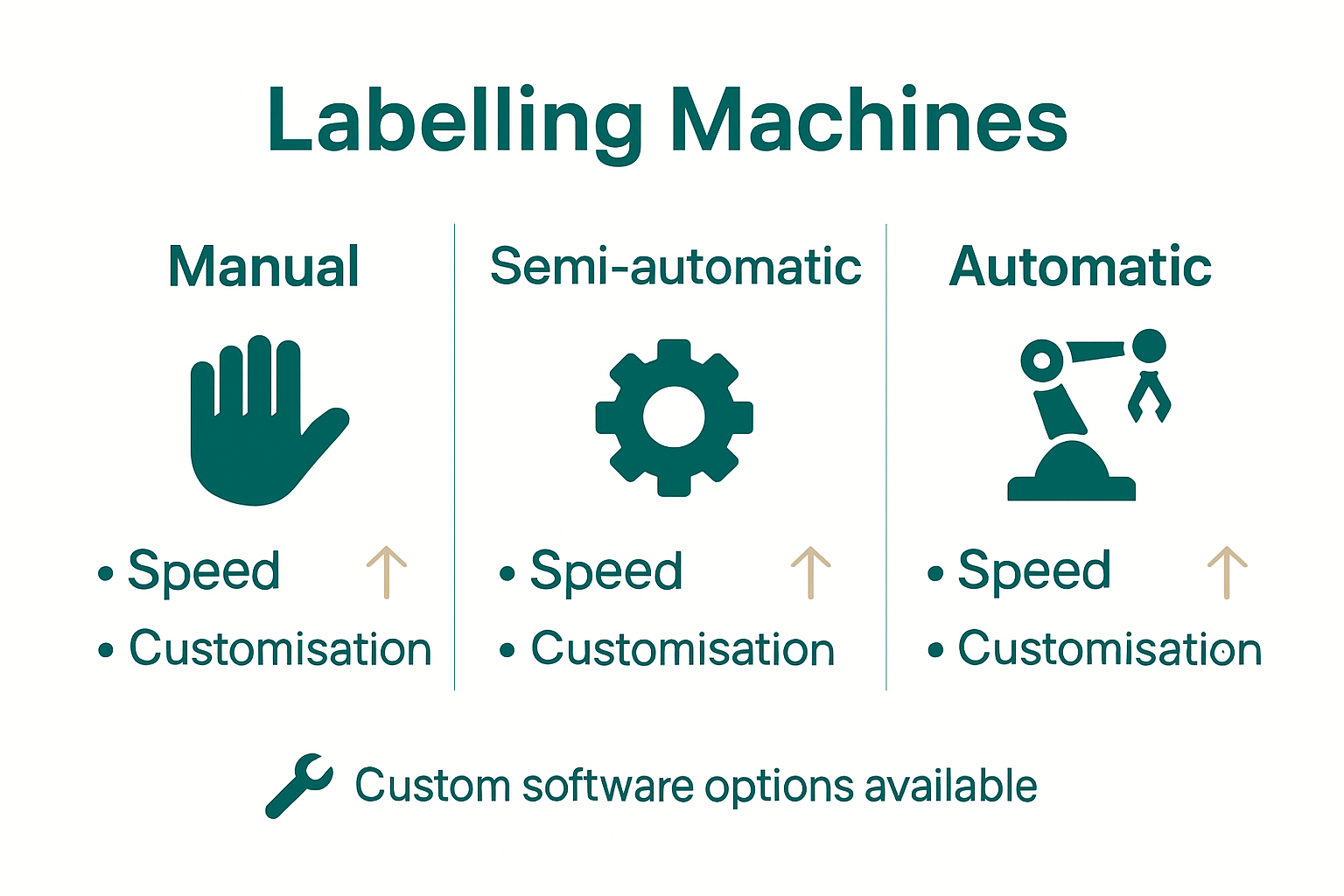
Mechanical Customisation allows manufacturers to modify core machine components to suit specific packaging needs. This includes adjustable frame sizes, interchangeable label applicators, and modular design principles that permit rapid reconfiguration between different product types. Manufacturers can select from various mounting options, transport mechanisms, and label alignment systems that ensure optimal performance across diverse container shapes and sizes.
Technological customisation represents another crucial dimension of modern labelling equipment. Key customisable features include:
Precision Customisation is particularly critical in industries with stringent regulatory requirements. Pharmaceutical and medical device manufacturers require labelling systems with:
Software and connectivity options further enhance machine customisation. Modern labelling systems can integrate with enterprise resource planning platforms, allowing real-time production tracking, automated reporting, and seamless data management across manufacturing processes. By selecting machines with comprehensive customisation capabilities, production managers can create highly adaptable labelling solutions that evolve alongside their changing business requirements.
Navigating the complex landscape of regulatory compliance demands meticulous attention to detail in labelling machine selection and implementation. Unified eco-labelling systems represent a critical evolving standard across multiple industries, requiring manufacturers to implement sophisticated labelling technologies that meet stringent legal frameworks.
Industry-Specific Regulatory Standards differ significantly across sectors, creating unique compliance challenges. Pharmaceutical manufacturers must adhere to incredibly strict guidelines involving:
Food and beverage producers face equally complex regulatory environments. Compliance requirements encompass:
Modern labelling machines must incorporate advanced technological capabilities to ensure regulatory adherence. Integrated Verification Systems play a crucial role in maintaining compliance, featuring:
Automated quality control checks
Vision inspection technologies
Real-time data validation mechanisms
Comprehensive error logging systems
Configurable rejection protocols for non-compliant labels
By investing in technologically sophisticated labelling systems with robust compliance features, manufacturers can effectively mitigate regulatory risks, maintain product integrity, and demonstrate commitment to transparency and quality across their production processes.
Semi-automatic labelling machines represent a significant investment that requires careful financial and operational consideration. Understanding the total cost of ownership extends far beyond the initial purchase price, encompassing long-term maintenance, operational efficiency, and potential productivity gains.
Financial Considerations involve multiple layers of investment assessment. Manufacturers must evaluate:
Common Pitfalls that manufacturers frequently encounter include:
Expert advice consistently emphasises the importance of comprehensive evaluation. Crucial strategies for successful labelling machine investment include:
Beyond financial metrics, successful labelling machine selection requires a holistic approach that balances technological capability, operational flexibility, and long-term strategic alignment. Production managers must view these machines as critical infrastructure investments that directly impact product presentation, regulatory compliance, and overall manufacturing efficiency.
Choosing the right labelling machine can be a complex decision that directly impacts your product quality, compliance, and operational efficiency. If you are facing issues like inconsistent labels, high labour costs, or uncertainty about when to upgrade from manual to automatic systems this guide helps clarify your options. Understanding terms like “semi-automatic desktop labellers,” “wrap-around labelling,” and “code verification” empowers you to make decisions that reduce bottlenecks and improve speed while maintaining stringent regulatory standards.
At Sessions UK we specialise in guiding production teams to select and implement the ideal labelling solution. From compact semi-automatic machines for short runs to fully automatic inline systems that handle high volumes our expert team supports you at every step. We offer labelling machines designed for bottles, jars, trays, and pharmaceutical packaging with options for code checking and compliance. Explore our range of Bottle Labelling Machines and Pharmaceutical Labelling Machines to find equipment tailored to your specific product and line speed.
Don’t let labelling be a bottleneck any longer. Visit Sessions UK today to discover how our labelling machinery and expert advice can transform your packaging process. Get in touch to discuss your needs and take the first step towards reliable, consistent, and compliant product labelling.
Labelling machines are used to automatically apply adhesive labels onto products, ensuring precision and consistency in packaging. They are essential in various industries, including food, pharmaceuticals, cosmetics, and beverages.
There are several types of labelling machines, including semi-automatic desktop machines suitable for smaller production runs, automatic inline labelling systems for high-volume production, specialised pharmaceutical labellers, and equipment tailored for bottles and jars.
Choosing the right labelling machine involves evaluating your production needs, product specifications, and operational constraints. Consider factors such as the type of product, label size, required speed, and whether the machine needs to integrate with existing production systems.
Compliance requirements vary by industry but generally include accurate nutritional information, ingredient declarations, allergens, traceability mechanisms, and adherence to specific labelling protocols. Advanced labelling machines often feature integrated verification systems to ensure compliance with these regulations.

Smarter Pharmaceutical Labels That Stop Recalls Before They Start Pharmaceutical recalls are painful. They slow production, create worry for patients, and pull whole teams into...
How High-Speed Labeling Transforms Bottle Production High-speed bottling lines work hard when spring and early summer hit. Drinks move faster, orders stack up, and every...

Comprehensive guide to labelling machines: what they are, key types, practical benefits, regulatory factors, and choosing the right solution for UK industries.
Copyright © 2026 Sessions Label Solutions Ltd.