
More than 80 percent of british manufacturing businesses rely on labelling machines to ensure accuracy and efficiency on their production lines. With shifting regulations and growing consumer expectations, the way products are labelled has become crucial for both traceability and brand recognition. Understanding labelling machines helps manufacturers choose the right system to improve consistency, guarantee compliance, and support large-scale operations with confidence.
| Point | Details |
|---|---|
| Purpose of Labelling Machines | Labelling machines automate label application, ensuring consistency, efficiency, and regulatory compliance across various industries. |
| Types of Labelling Machines | There are two main categories: semi-automatic labellers for smaller runs and fully automatic systems for high-volume production. |
| Benefits of Automation | Automated labelling offers precision, speed, and significant reductions in labour costs while eliminating human error. |
| Regulatory Compliance | Accurate labelling is essential for meeting industry regulations and maintaining product traceability and safety. |
Labelling machines are sophisticated industrial devices engineered to apply self-adhesive labels consistently and precisely onto various product packaging formats. These machines represent a critical technological solution for manufacturers seeking to standardise their product presentation, ensure regulatory compliance, and streamline production processes.
At their core, labelling machines automate the critical task of label application across multiple industries including food and beverage, pharmaceuticals, cosmetics, and nutraceuticals. Accurate label placement becomes paramount when considering product traceability, brand integrity, and regulatory requirements. Modern labelling machines range from compact semi-automatic desktop units ideal for smaller production runs to fully automated inline systems capable of handling high-volume manufacturing environments.
The fundamental purpose of labelling machines extends beyond mere aesthetic considerations. These precision instruments serve multiple strategic functions:
Manufacturers investing in semi-automatic labelling technologies can expect significant improvements in production consistency, reducing waste and enhancing overall operational efficiency. Whether managing small craft production or large-scale industrial manufacturing, these machines provide a scalable solution for precise product labelling across diverse packaging formats.
Labelling machines are diverse technological solutions designed to meet specific packaging requirements across multiple manufacturing sectors. Understanding the primary types of labelling machines helps businesses select the most appropriate equipment for their production needs. These machines can be broadly categorised into several key configurations, each offering unique capabilities for different packaging formats and industry requirements.
The primary categories include semi-automatic desktop labellers and fully automatic inline labelling systems. Choosing the right bottle labelling machine becomes crucial for manufacturers seeking precision and efficiency. Semi-automatic machines are ideal for smaller production runs, craft producers, and businesses with multiple product variations, allowing manual product loading with automated label application. Conversely, fully automatic inline systems represent the pinnacle of labelling technology, designed for high-volume manufacturing environments where continuous production and minimal human intervention are paramount.
Key types of labelling machines can be further classified based on specific application requirements:
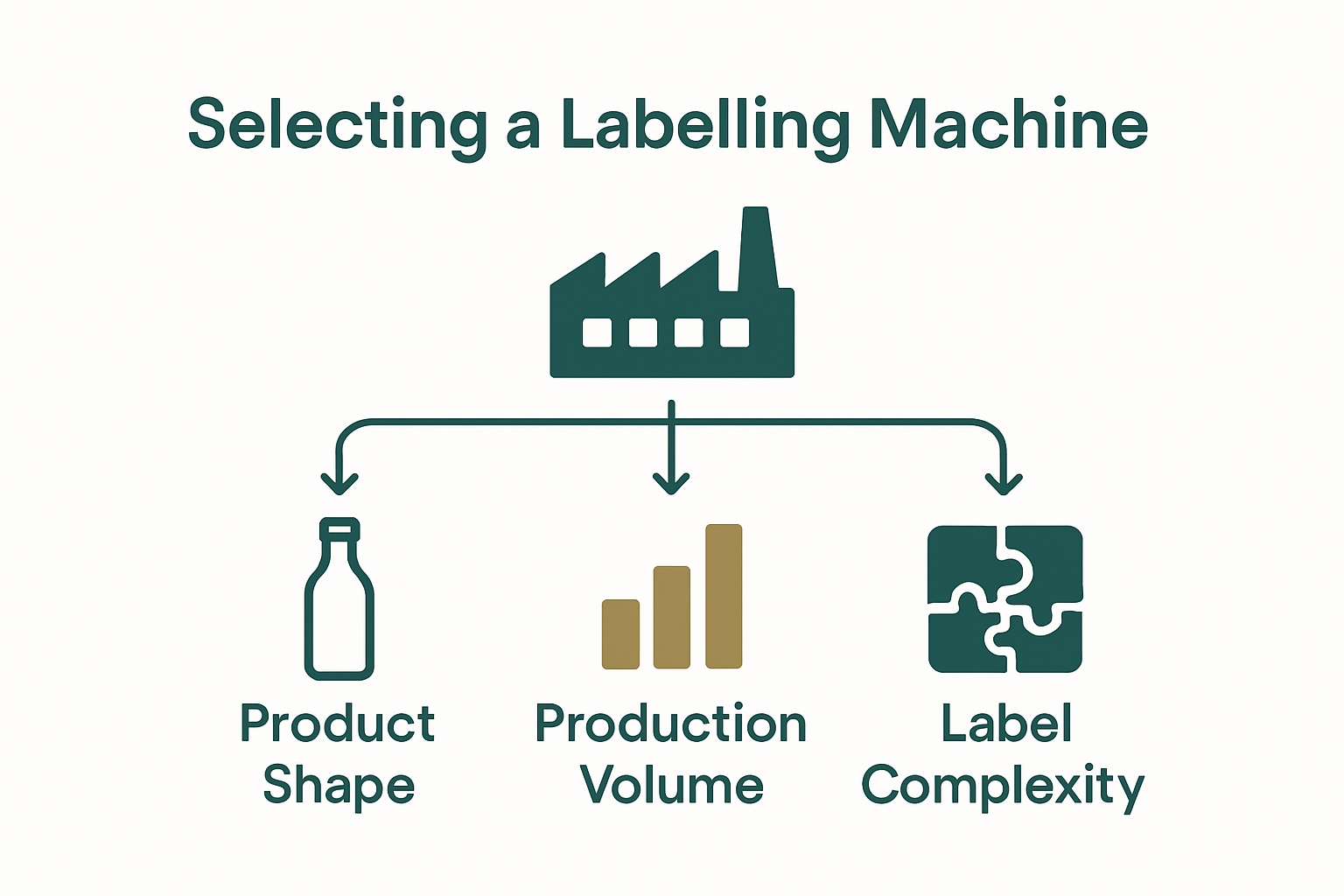
Manufacturers must consider factors such as production volume, product shape, label complexity, and regulatory requirements when navigating options for label printing machines. The right labelling machine can significantly enhance production efficiency, brand consistency, and compliance across diverse manufacturing environments.
Automated labelling systems represent a transformative technology for manufacturers seeking to optimise production processes, reduce operational costs, and maintain exceptional product quality. These sophisticated systems go far beyond simple label application, delivering comprehensive solutions that address multiple critical manufacturing challenges across diverse industrial sectors.
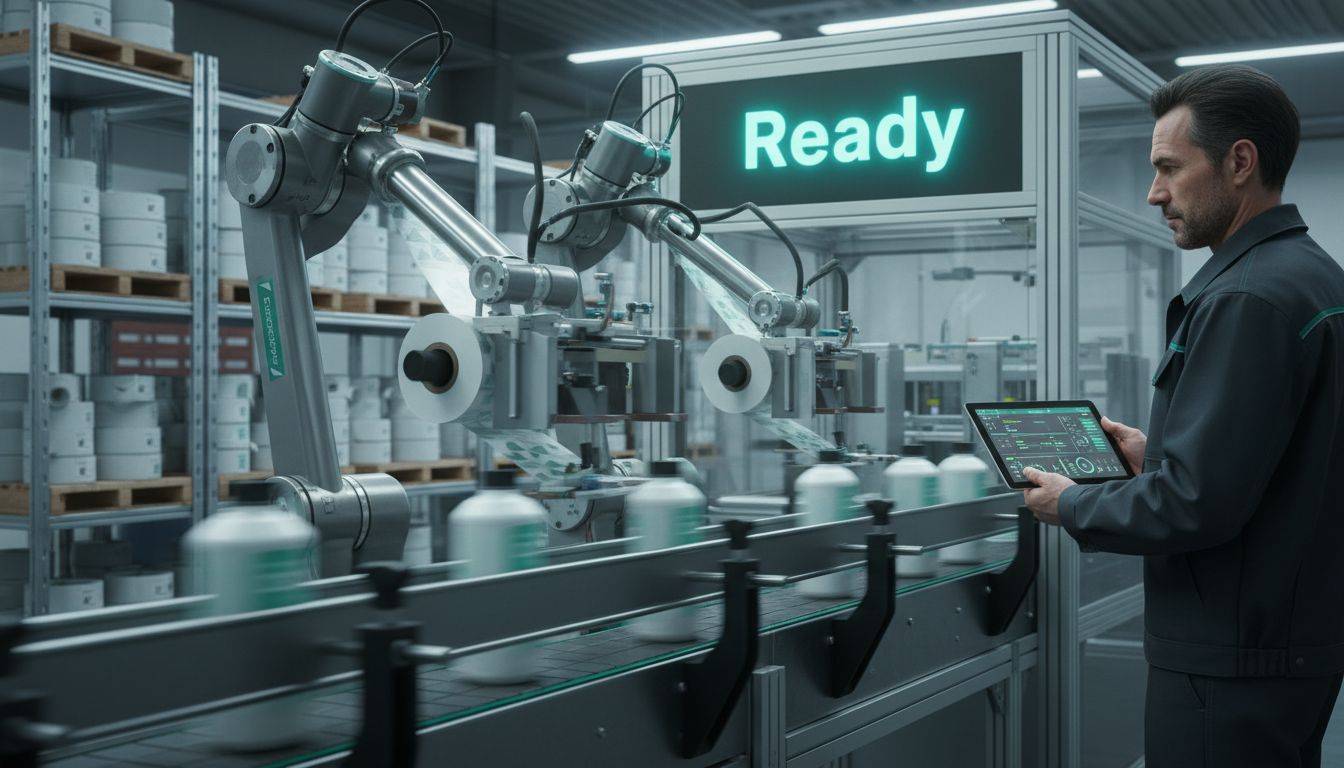
The strategic advantages of automated labelling become evident when examining key performance metrics. Time-saving labelling methods demonstrate significant improvements in production efficiency, with automated systems capable of applying labels at speeds impossible through manual processes. Manufacturers can typically expect a dramatic reduction in labour costs, increased consistency in label placement, and substantially reduced error rates compared to traditional hand-labelling techniques.
Key benefits of automated labelling systems include:
Modern manufacturers investing in automatic labelling machines unlock substantial competitive advantages. These systems not only streamline production but also provide critical data tracking, quality assurance, and scalability that manual processes cannot match. By integrating advanced labelling technologies, businesses can transform their packaging operations from a potential bottleneck into a strategic manufacturing strength.
Modern manufacturing environments demand rigorous standards of traceability, safety, and information accuracy across multiple industries. Labelling machines play a crucial role in meeting these complex regulatory requirements, serving as sophisticated platforms for ensuring product compliance and maintaining comprehensive documentation throughout the production process.
The significance of precise labelling becomes evident when examining industry-specific regulations. Tagging systems demonstrate the critical importance of recording and displaying accurate machinery status, highlighting how technological solutions can support regulatory compliance. Different sectors such as pharmaceuticals, food production, and medical devices require meticulous label information including batch numbers, expiry dates, ingredient lists, and manufacturing origins.
Key regulatory compliance considerations for labelling systems include:
In-mould labelling technologies illustrate how advanced manufacturing techniques can seamlessly integrate compliance requirements directly into product packaging. By implementing sophisticated labelling systems, manufacturers can transform regulatory challenges into strategic advantages, ensuring not just compliance, but also enhanced brand credibility and consumer trust across complex global supply chains.
Choosing the appropriate labelling machine represents a critical strategic decision for manufacturers across diverse production environments. The selection process demands careful consideration of multiple interconnected factors that extend far beyond simple technical specifications, requiring a comprehensive evaluation of production goals, product characteristics, and long-term operational requirements.
Manufacturers must conduct a thorough assessment of their specific labelling needs, considering variables such as product volume, packaging diversity, and regulatory compliance demands. Buying guide for bottle labelling machines highlights the importance of matching machine capabilities precisely to production requirements, ensuring optimal performance and efficiency across different manufacturing scenarios.
Key selection criteria for identifying the most suitable labelling machine include:
Understanding labelling machine costs reveals that manufacturers should view machine selection as a strategic investment rather than a mere purchasing decision. By carefully evaluating technical requirements, production constraints, and future scalability, businesses can select a labelling solution that not only meets current needs but also supports sustainable growth and operational excellence.
The challenges of inconsistent label application, costly manual labour, and compliance concerns are common hurdles highlighted in “The Essential Guide to Labelling Machines in the UK”. At Sessions UK, we understand these issues deeply and provide labelling machinery designed to bring precision, efficiency, and peace of mind to your production line. Whether you need a compact semi-automatic desktop machine for pilot runs or a fully automatic system to keep pace with high-volume demands, our expert team helps you find exactly what fits your product range and regulatory needs.
Explore our extensive range of Bottle Labelling Machines and Automatic Labelling Machines which deliver consistent, on-brand results that enhance your operational flow. Don’t let label application hold back your business growth. Visit Sessions UK today for personalised advice, sample testing, and ongoing support from industry specialists committed to your success.
Labelling machines are industrial devices designed to apply self-adhesive labels onto various product packaging formats. Their primary purpose is to enhance label application consistency, ensure regulatory compliance, and streamline production processes across multiple industries.
Labelling machines can be categorised into several types, including semi-automatic desktop labellers, fully automatic inline systems, wrap-around labellers, front-and-back labellers, top labellers, and print-and-apply machines. Each type is suited for specific packaging formats and production needs.
Automated labelling systems enhance production efficiency by applying labels at high speeds, ensuring label precision, and reducing the potential for human error. This technology allows for quicker changeovers between product types and significantly lowers labour costs.
When selecting a labelling machine, manufacturers should evaluate factors such as production volume, product diversity, label complexity, integration capability with existing systems, and budget constraints to ensure they choose a machine that fits their operational needs.

Smarter Pharmaceutical Labels That Stop Recalls Before They Start Pharmaceutical recalls are painful. They slow production, create worry for patients, and pull whole teams into...
How High-Speed Labeling Transforms Bottle Production High-speed bottling lines work hard when spring and early summer hit. Drinks move faster, orders stack up, and every...

Comprehensive guide to choosing labelling machines: types, key features, costs, compliance, and expert tips for UK manufacturers. Make informed decisions.
Copyright © 2026 Sessions Label Solutions Ltd.