
Over 60 percent of British manufacturers identify labelling as a major bottleneck in their production process. Staying competitive means finding efficient ways to ensure products always look professional on the shelf. Semi-automatic label machines are transforming the way British businesses manage packaging by blending accuracy and flexibility without the massive expense of full automation. Discover how this accessible technology is giving British companies a powerful edge in quality and efficiency.
| Point | Details |
| Semi-Automatic Label Machines | These machines combine manual intervention with automated label application, optimising labelling efficiency for small to medium production runs. |
| Types of Labellers | Main types include cylindrical, flat surface, and top and bottom labellers, catering to various container shapes and industry needs. |
| Operational Advantages | They offer reduced labour costs and increased accuracy compared to manual labelling, while being more flexible and less costly than fully automated systems. |
| Industry Versatility | Semi-automatic labellers are essential in food, pharmaceuticals, and cosmetics, providing tailored solutions for specific packaging requirements. |
Semi-automatic label machines represent an innovative solution for manufacturers seeking precision and efficiency in product labelling without committing to fully automated systems. These compact machines bridge the gap between manual hand labelling and complex industrial labelling lines, offering production teams a flexible and cost-effective approach to applying labels consistently.
At their core, semi-automatic label machines are designed to streamline product packaging processes by automating label application while still requiring some manual operator intervention. Typically positioned on a production bench or workstation, these machines allow an operator to manually place products and initiate the labelling process, with the machine handling precise label placement, alignment, and application. Semi-automatic labelling solutions work exceptionally well for businesses running smaller production volumes or requiring frequent product changeovers.
Key features of semi-automatic label machines include:
Compact, desktop-friendly design
Manual product loading with automated label application
Consistent label positioning and alignment
Suitable for various container shapes and sizes
Ideal for short to medium production runs
Significantly reduced labour costs compared to hand labelling
These machines represent a strategic investment for growing businesses in food production, pharmaceuticals, cosmetics, and beverages. By reducing human error and increasing labelling speed, semi-automatic label machines help manufacturers maintain professional packaging standards while maintaining production flexibility.
Semi-automatic labelling machines come in diverse configurations designed to meet the specific packaging needs of different industries. Comprehensive labeller types range from compact desktop units to more specialised machines for specific container shapes and product requirements.
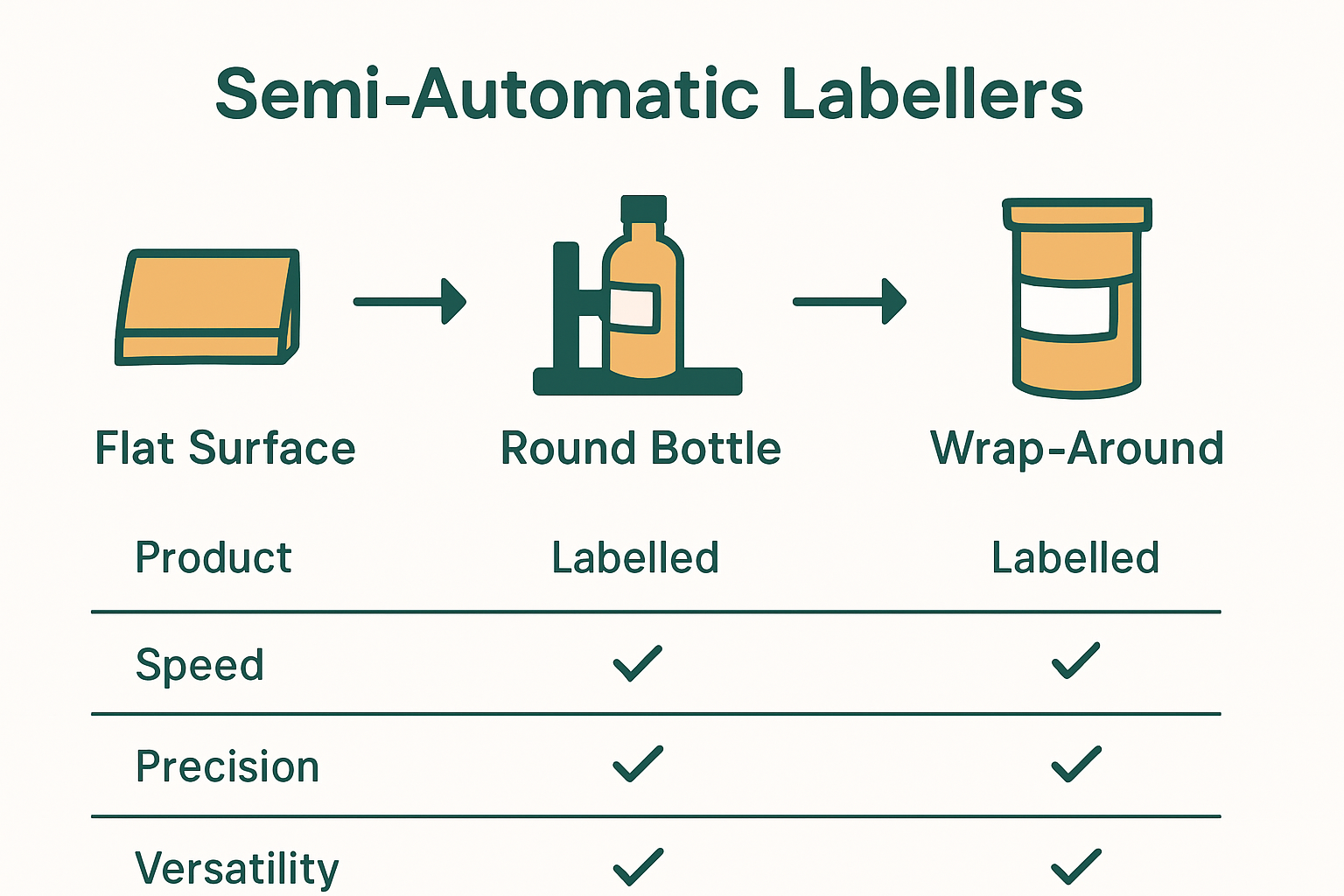
Container-specific labellers represent a critical category of semi-automatic machines. Bottle applicators are engineered for cylindrical containers, providing precise wrap-around or front-and-back label placement for industries like beverages, cosmetics, and pharmaceuticals. These machines accommodate various bottle diameters and label sizes, making them incredibly versatile for production lines.
The main types of semi-automatic labellers include:
Cylindrical Container Labellers
Ideal for bottles, jars, and round containers
Adjustable for different diameters and heights
Suitable for food, beverage, and pharmaceutical sectors
Flat Surface Labellers
Designed for boxes, cartons, and rectangular packaging
Precise placement on flat or slightly curved surfaces
Perfect for food packaging, cosmetics, and consumer goods
Top and Bottom Labellers
Apply labels simultaneously to top and bottom surfaces
Useful for packaging that requires comprehensive labelling
Common in food, chemical, and industrial product sectors
These versatile machines offer manufacturers a flexible solution between manual labelling and fully automated systems. By selecting the appropriate semi-automatic labeller, businesses can significantly improve labelling accuracy, reduce manual labour, and maintain the agility needed for changing production requirements.
Semi-automatic label machines operate through a carefully choreographed process that balances human intervention with mechanical precision. Using label application machines requires understanding the intricate workflow that transforms manual labelling into a streamlined, efficient operation.
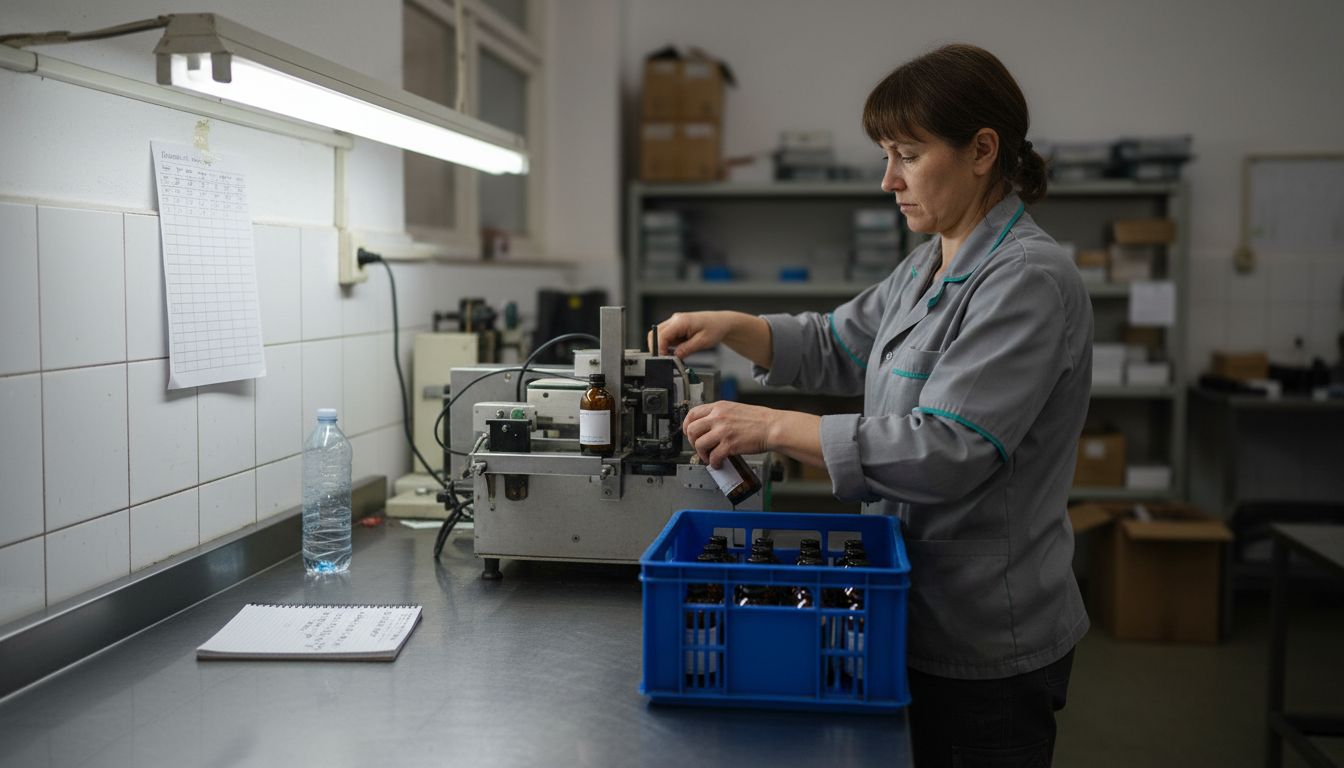
The core operational sequence begins with an operator manually positioning the product on a designated loading platform. Product placement is crucial, as the machine’s sensors and alignment mechanisms depend on precise initial positioning. Once the product is correctly situated, the operator triggers the labelling cycle, which typically involves several key stages:
Key operational stages include:
Product Alignment
Sensors verify product positioning
Adjusts for container size and shape
Ensures consistent label placement
Label Dispensing
Precise label extraction from roll or stack
Controlled adhesive application
Minimises label waste
Label Application
Mechanical applicator transfers label
Applies consistent pressure
Smooths out air bubbles and wrinkles
Quality Verification
Optional optical sensors check label placement
Rejects incorrectly labelled products
Maintains high production standards
These machines represent a sophisticated blend of mechanical engineering and production efficiency. By combining human oversight with automated precision, semi-automatic label machines offer manufacturers a flexible solution that bridges the gap between manual processes and fully automated production lines.
Semi-automatic label machines serve as versatile solutions across numerous industries, addressing unique labelling challenges for manufacturers with varying production scales and requirements. Automatic labelling solutions demonstrate remarkable adaptability across diverse sectors, making them an essential tool for precise product identification and packaging.
Manufacturing sectors benefit significantly from these machines, with each industry leveraging semi-automatic labellers to meet specific operational needs. Food and beverage producers use these machines for labelling bottles, jars, and packaging with ingredient information, nutritional details, and branding. Pharmaceutical companies rely on precise labelling for medical vials, syringes, and packaging that requires strict regulatory compliance, ensuring accurate batch numbers, expiry dates, and traceability.
Typical industry applications include:
Food and Beverage
Craft breweries and microbreweries
Artisan sauce and condiment producers
Small-scale dairy product manufacturers
Speciality food packaging
Pharmaceutical and Healthcare
Medical device labelling
Diagnostic kit packaging
Clinical trial sample identification
Supplement and nutraceutical labelling
Cosmetics and Personal Care
Skincare product labelling
Natural and organic product lines
Small batch beauty brands
Speciality toiletry manufacturers
These machines offer manufacturers a strategic advantage by providing flexibility, precision, and cost-effective labelling solutions that adapt to changing production requirements. From small craft producers to growing industrial lines, semi-automatic label machines bridge the gap between manual processes and full automation.
Semi-automatic label machines occupy a strategic middle ground between manual labelling processes and fully automated systems, offering manufacturers a nuanced solution for their packaging requirements. Best practices for labelling machine maintenance highlight the critical importance of understanding these machines’ unique positioning in production workflows.
Comparative advantages of semi-automatic label machines become evident when examining their performance against alternative labelling methods. Unlike entirely manual processes, these machines dramatically reduce human error and increase labelling consistency. Compared to fully automated systems, they provide significantly lower initial investment costs and greater flexibility for businesses with variable production volumes or multiple product lines.
Key comparative characteristics include:
Cost Considerations
Lower upfront investment than fully automated systems
Reduced labour costs compared to manual labelling
Scalable solution for growing businesses
Operational Flexibility
Easy product and label changeovers
Adaptable to different container sizes
Suitable for short and medium production runs
Performance Limitations
Lower throughput compared to fully automatic machines
Requires consistent operator involvement
Not ideal for extremely high-volume production
While semi-automatic label machines represent an excellent compromise for many manufacturers, they are not a universal solution. Businesses must carefully evaluate their specific production requirements, considering factors such as volume, product diversity, and budget constraints to determine whether these machines align with their operational needs.
If you are facing challenges like crooked or inconsistent labels slowing down your production, or if you want to reduce labour costs while improving label application accuracy, Sessions UK offers tailored solutions that perfectly align with your needs. Our range of Semi-Automatic Desktop Labelling Machines provide the ideal balance between manual control and mechanised precision. These compact units are excellent for short to medium production runs, helping you step away from labour-intensive hand labelling without the commitment of a fully automated line.
Whether you produce bottles, jars, cartons or specialised pharmaceutical packaging, our expertise can help you choose and implement the right machine to increase productivity and maintain high-quality labelling standards. Don’t let labelling bottlenecks hold your business back. Explore how Sessions UK can support you with expert advice, machine installation, and ongoing service all designed to keep your line running smoothly. Take the next step today by visiting Sessions UK and transform your labelling process.
Semi-automatic label machines are devices that automate the label application process while requiring some manual operator intervention. They are designed to streamline product packaging with precise label placement, making them ideal for smaller production volumes.
These machines typically involve an operator manually placing a product on a loading platform. Once positioned, the operator initiates the labelling cycle, which includes product alignment, label dispensing, application, and quality verification to ensure proper label placement.
Semi-automatic label machines are widely used in various sectors, including food and beverage production, pharmaceuticals, and cosmetics. They help address each industry’s unique labelling challenges, such as compliance and branding consistency.
Semi-automatic label machines typically require lower upfront investments, offer greater operational flexibility, and are ideal for short to medium production runs. They reduce human error compared to manual labelling but generally have lower throughput than fully automated machines.

Smarter Pharmaceutical Labels That Stop Recalls Before They Start Pharmaceutical recalls are painful. They slow production, create worry for patients, and pull whole teams into...
How High-Speed Labeling Transforms Bottle Production High-speed bottling lines work hard when spring and early summer hit. Drinks move faster, orders stack up, and every...

Comprehensive guide to labelling machines: what they are, key types, practical benefits, regulatory factors, and choosing the right solution for UK industries.
Copyright © 2026 Sessions Label Solutions Ltd.