
Nearly 60 percent of labelling equipment installations in british industries serve the food and beverage sector, showing just how vital efficient packaging has become. Businesses seek accuracy and speed as production demands grow more complex, but keeping costs down is just as important. If you run a british business, understanding the real advantages of semi-automatic labellers can help you improve consistency, reduce wasted time, and ensure your products stand out on crowded shelves.
| Point | Details |
|---|---|
| Semi-Automatic Labellers Enhance Efficiency | These machines automate the labelling process while requiring minimal manual input, resulting in faster production speeds and improved consistency. |
| Flexibility Across Industries | Semi-automatic labellers cater to various sectors, including food, pharmaceuticals, and cosmetics, enabling businesses to scale production effectively. |
| Cost-Effective Solution | They offer a balance between manual labour and fully automated systems, allowing businesses to improve efficiency without significant investment. |
| Importance of Operator Training | Proper training and ergonomic design are crucial to maximise the performance and consistency of semi-automatic labelling operations. |
A semi-automatic labeller is a specialised piece of packaging equipment designed to streamline product labelling processes with minimal manual intervention. Unlike fully manual methods, these machines require an operator to physically position each container, after which the machine automatically applies labels with precision and consistency.
The core functionality of semi-automatic labellers involves an operator loading individual products onto the machine’s platform or conveyor. Labelling machine operations then proceed with the machine handling label application, alignment, and placement automatically. Typical configurations can achieve impressive speeds of approximately 3,600 labels per hour, depending on the operator’s container replacement speed.
Semi-automatic labellers are particularly valuable for businesses experiencing transitional production stages. They offer significant advantages over completely manual labelling processes:
These machines bridge the gap between manual hand labelling and fully automated industrial labelling systems. They provide manufacturers in food, pharmaceutical, and personal care industries a flexible solution for scaling production without massive capital investment in complex automated equipment.
Semi-automatic labellers are sophisticated pieces of equipment with several core operating principles that distinguish them from fully manual or fully automated systems. Bottle labelling machines typically incorporate a systematic approach where human intervention and machine precision work in tandem to achieve efficient product packaging.
The fundamental operating mechanism involves a structured workflow where an operator manually positions containers on a dedicated platform or conveyor. Once positioned, the machine takes over, executing precise label application through integrated mechanisms. These mechanisms include precise alignment sensors, adjustable label placement controls, and automated application systems that ensure consistent label positioning across different product shapes and sizes.
Key features of semi-automatic labellers generally encompass several critical components:
Manufacturers across food, pharmaceutical, and personal care sectors appreciate these machines for their flexibility. They provide a scalable solution that bridges the gap between manual labour and full automation, allowing businesses to incrementally improve their production efficiency without substantial capital investment.
Semi-automatic labelling machines vary widely to accommodate diverse industrial requirements, with each type designed to address specific packaging challenges. Semi-automatic labelling solutions typically fall into several distinct categories based on container shape, label application method, and production environment.
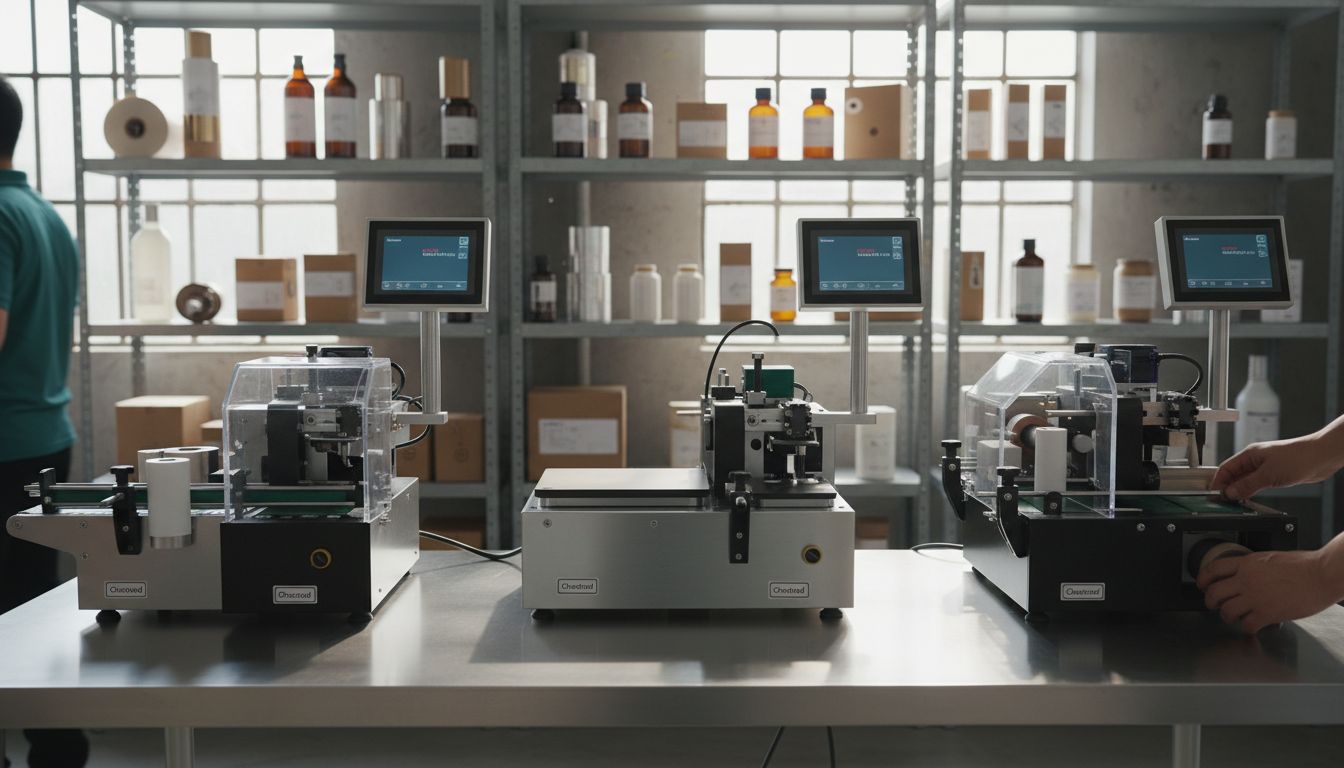
The primary classifications of semi-automatic labellers include round bottle labellers, rectangular container labellers, and specialised industry-specific machines. Round bottle labellers are particularly prevalent in beverage, pharmaceutical, and cosmetic industries, featuring mechanisms that can wrap labels around cylindrical containers with remarkable precision. Rectangular container labellers, by contrast, are engineered to handle square or rectangular packaging, offering flexible label placement on multiple panel surfaces.
Key types of semi-automatic labelling machines include:
Manufacturers must carefully select semi-automatic labelling machines based on their specific production requirements, considering factors such as container geometry, label size, production volume, and industry-specific regulatory standards. The versatility of these machines allows businesses to incrementally improve their packaging processes without significant capital investment.
Semi-automatic labelling machines play a crucial role across multiple UK industrial sectors, providing flexible and efficient packaging solutions for businesses of varying scales. Industrial labelling systems have become increasingly sophisticated, adapting to the complex requirements of different manufacturing environments.
In the UK manufacturing landscape, these labelling machines are particularly prevalent in several key industries. The research indicates that food and beverage sectors dominate the market, accounting for nearly 60% of labelling machine installations. Pharmaceutical manufacturers, cosmetics producers, and speciality food producers represent significant secondary markets, each with unique labelling requirements that demand precision and adaptability.
Typical industry applications include:
Manufacturers across these industries appreciate semi-automatic labellers for their ability to provide consistent, professional labelling without requiring substantial capital investment. These machines offer the flexibility to handle small to medium production runs while maintaining high standards of label accuracy and presentation.
Semi-automatic labelling machines represent a strategic middle ground between completely manual processes and fully automated systems, offering manufacturers a flexible and efficient solution. Automatic labelling machines provide comprehensive understanding of how different labelling approaches compare across production environments.
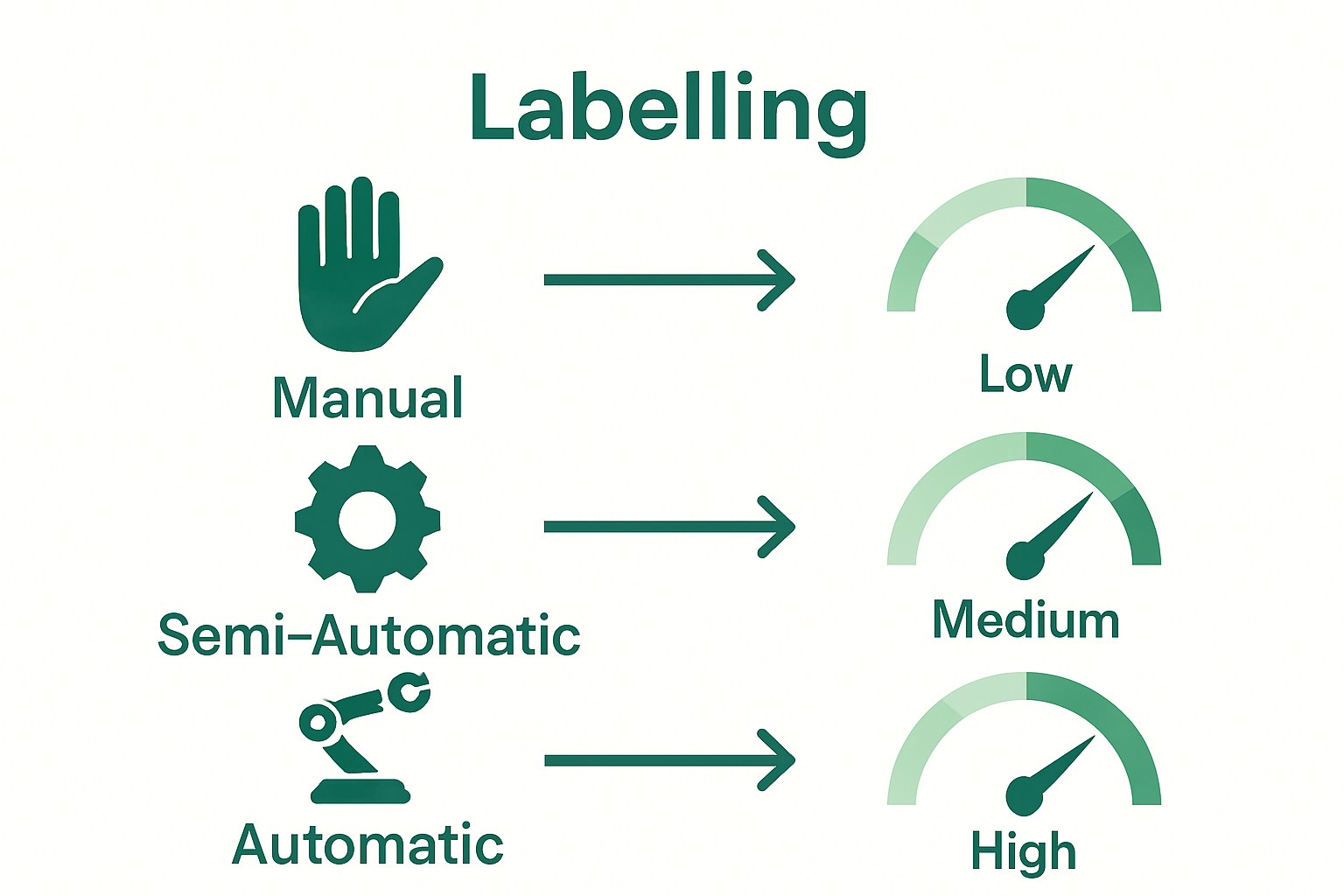
The research indicates that semi-automatic labellers deliver a compelling balance between manual and fully automated methods. Unlike manual labelling, which relies entirely on human effort and is prone to inconsistencies, semi-automatic systems significantly enhance production speed and label precision. Compared to fully automatic machines, these systems provide greater adaptability and require a lower initial capital investment, making them particularly attractive for small to medium-sized production runs.
Key comparative benefits include:
Manual Labelling Limitations:
Semi-Automatic Labelling Advantages:
Fully Automatic Labelling Considerations:
Manufacturers can strategically select labelling solutions based on their specific production requirements, understanding that semi-automatic systems offer a nuanced approach that balances efficiency, cost-effectiveness, and operational flexibility.
Navigation of potential challenges in semi-automatic labelling requires strategic planning and proactive management. Labelling machine maintenance plays a critical role in mitigating operational risks and ensuring consistent performance across production environments.
One significant challenge involves operator-dependent production limitations. Research highlights that the throughput of semi-automatic labelling systems directly correlates with operator efficiency and training. Manufacturers must invest in comprehensive operator training programmes and consider ergonomic machine designs that minimise fatigue and maximise performance consistency.
Key pitfalls and strategic mitigation strategies include:
Label Alignment Challenges:
Operator Performance Limitations:
Technical Configuration Errors:
Successful implementation of semi-automatic labelling requires a holistic approach that balances technological capabilities with human performance, ensuring consistent and high-quality product presentation.
If you are seeking to overcome challenges like inconsistent label placement and costly manual processes discussed in the Complete Guide to Semi-Automatic Labellers UK you will benefit from Sessions UK’s expert support and range of semi-automatic labelling machines. Our solutions help manufacturers improve label accuracy reduce labour costs and speed up production while maintaining flexibility for short to medium runs.
From compact desktop units perfect for growing brands to versatile bottle labelling machines ideal for various container shapes we provide tailored options to meet your unique needs. Explore how our expert team can help you choose the right equipment setup Labelling Machines and support you through installation and ongoing maintenance to ensure smooth operation and reduced downtime.
Take the next step to elevate your labelling process today by visiting Sessions UK. Find out how our tailored semi-automatic and fully automatic labelling systems can transform your production line with precision and reliability.
A semi-automatic labeller is a piece of packaging equipment that automates the labelling process but requires an operator to position each container. The machine then applies labels consistently and accurately.
Semi-automatic labellers improve label consistency, reduce human error, and enhance production speeds, offering a cost-effective solution with lower labour requirements compared to manual labelling methods.
Semi-automatic labellers can accommodate various product shapes and sizes, including round bottles, rectangular containers, and specific industry needs, making them versatile for food and beverage, pharmaceutical, and cosmetic industries.
To maintain optimal performance, regularly calibrate alignment sensors, conduct quality control checks, and provide comprehensive training for operators to reduce human error and ensure consistent label application.

Smarter Pharmaceutical Labels That Stop Recalls Before They Start Pharmaceutical recalls are painful. They slow production, create worry for patients, and pull whole teams into...
How High-Speed Labeling Transforms Bottle Production High-speed bottling lines work hard when spring and early summer hit. Drinks move faster, orders stack up, and every...

Comprehensive guide to labelling machines: what they are, key types, practical benefits, regulatory factors, and choosing the right solution for UK industries.
Copyright © 2026 Sessions Label Solutions Ltd.